State-of-the-art equipment for the micrometre-scale analysis of polymeric materials in medical applications
Human organ mimicry and tissue generation to replace damaged areas of the human body have come on leaps and bounds thanks to the advances made in biomaterials and their characterisation. However, these applications require a comprehensive study of the functions of the tissues and organs being simulated, and the micrometre-scale characterisation of the materials used to do this is essential.
Thanks to the Basque government’s Department of Economic Development, Sustainability and the Environment’s AZPITEK 2022 programme, Leartiker has acquired a confocal microscope that represents a giant leap forward for the technology centre in the acquisition of high-quality images to characterise the polymeric materials used in the development of microfluidic devices for organ simulation (organ-on-a-chip) or scaffolds for tissue engineering applications.
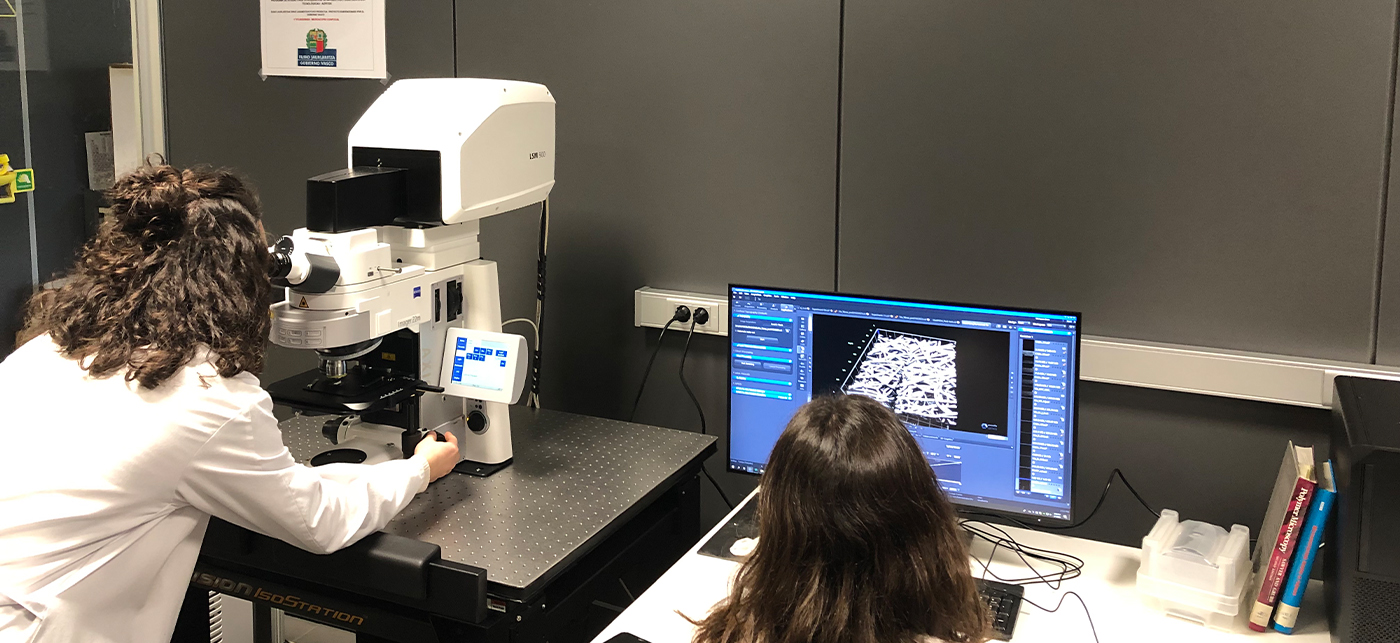
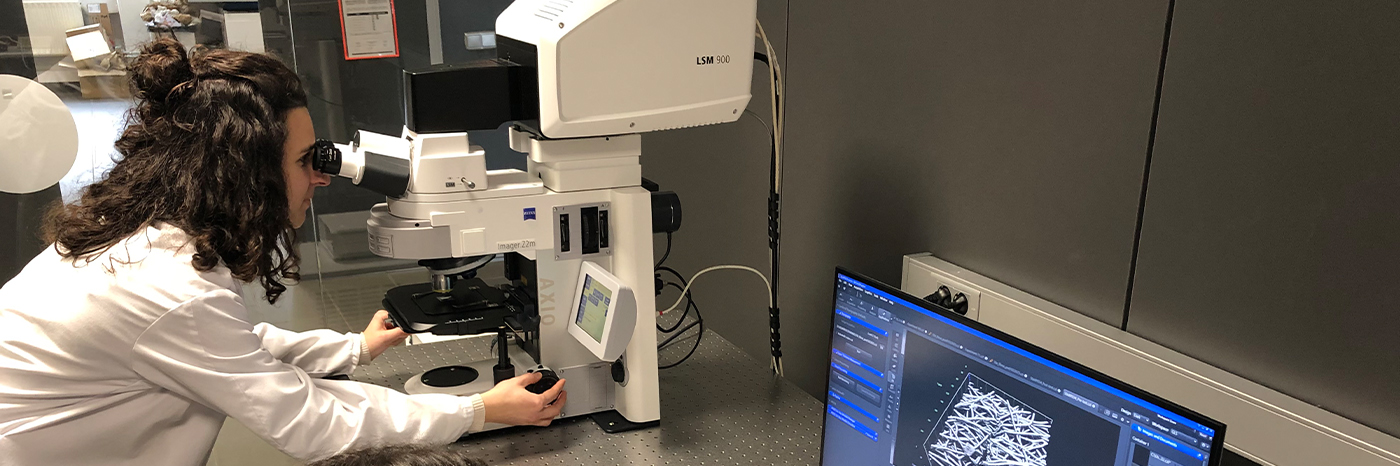
The new equipment, the Zeiss LSM 900, will enable the full characterisation of microfluidic devices, by determining the height and width of the developed channels, allowing further advancement in the development of methodologies for upscaling the manufacturing of those devices. Moreover, characterising the surface roughness of the polymeric materials used in organ-on-a-chip devices will allow researchers to understand the behaviour of bodily fluids and components at a micro-metric scale. Furthermore, this technology will make it possible to characterise the scaffolds that are designed and developed in Leartiker’s ISO Class 7 clean room, enabling the improvement of three-dimensional geometries and, at the same time, the cell adhesion and proliferation of those scaffolds.
Tissue engineering and custom-made medical devices
Looking to the future and given the growing advancement of biomedicine, for a number of years the Leartiker technology centre’s specialised Health area has been focusing its efforts on tissue engineering and the development of microfluidic devices. Two areas of research that are advancing at breakneck speed.
The equipment that the technology centre already has (ARBURG 270 A Electric 25 T thermoplastic injection moulding machine and an LSR BOY 25 E VV liquid silicone injection moulding machine, a REGEMAT Bio-v1 3D bioprinter, a 3DEVO extruder and an FDM Tumaker Voladora NX+ 3D printer, among others) has now been joined by this new Zeiss LSM 900 confocal microscope that will allow the researchers who specialise in Health to broaden their knowledge of polymeric materials through their micrometre-scale characterisation.






 info@leartiker.com