New Approaches in Scaffold Material Analysis: Understanding Fatigue Behavior
Researchers at Leartiker have made significant strides in understanding the behavior of scaffold materials through innovative characterization methods. In a recent study conducted as part of the SimInSitu project (Horizon 2020), valuable insights were gained into the fatigue behavior of scaffold materials developed by Xeltis, a Dutch medtech company developing transformative vascular implants that enable endogenous tissue restoration. Employing advanced methodologies, the team uncovered intriguing observations regarding the material's response to fatigue loading conditions.
SimInSitu is a European Horizon 2020 project led by the 4RealSim and has a consortium in which Leartiker is a joint partner together with other European entities: UNIPA, KU-Leuven, MINES Saint-Étienne, Xeltis, Capvidia, TU-Graz, and ISMETT.
This European initiative starded in 2021 with the aim of developing the first in silico Development & Clinical Trial Platform capable to predict the short- and long-term response of in situ tissue engineered heart valves (TEHV) in humans. A tool that will enable the virtual clinical evaluation and optimization of the performance and safety of TEHV by a multidisciplinary approach combining advanced patient-specific computational models, tissue & growth remodelling algorithms, and dedicated device models.
Significant advancement
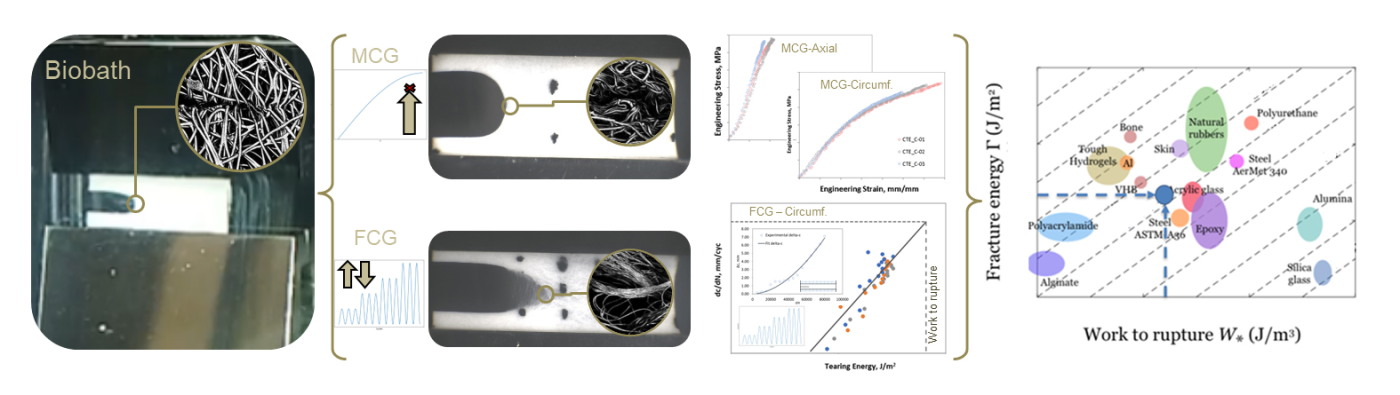
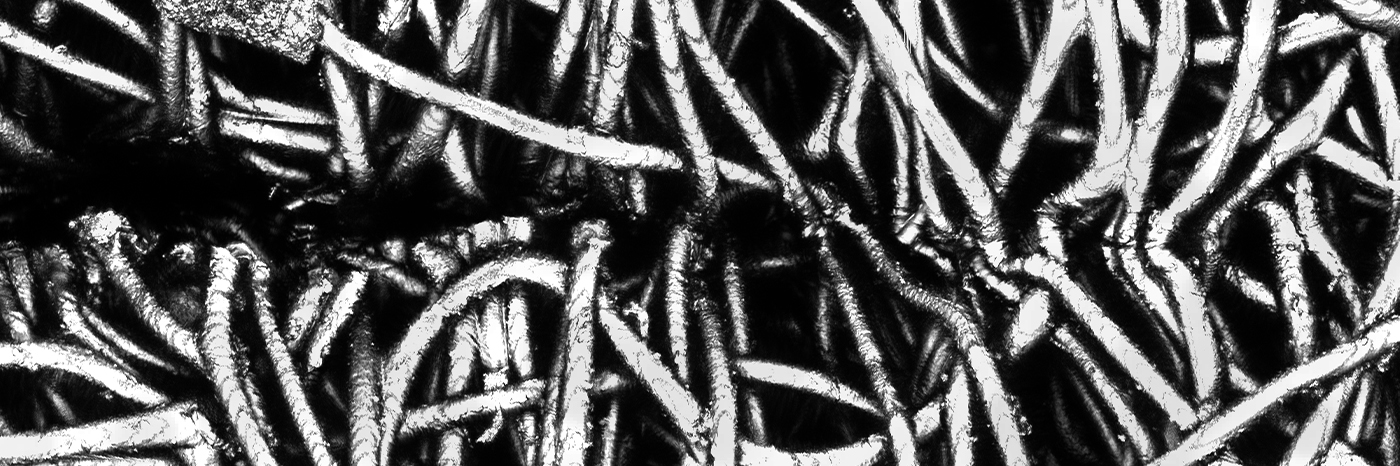
Microscopic analysis conducted as part of the investigation into the fatigue behaviour of the scaffold materials, revealed notable changes in fibril appearance and a reduction in diameter due to permanent deformation, providing evidence of fatigue. Additionally, distinct anisotropic behavior in crack propagation was observed, with a consistent preference for axial direction, emphasizing the influence of microstructure on fatigue performance. The characterization approach utilized in this study simplified material behavior into essential parameters such as work of fracture, tearing energy, and flaw sensitivity. These parameters offer valuable insights into fracture resistance, crack growth behavior, and flaw sensitivity, facilitating comparisons across different conditions.
The implications of these findings are significant, providing researchers and engineers with crucial parameters for informed decision-making and enabling comparisons with other materials or different scaffold versions. Furthermore, the data generated can fuel predictive models, facilitating deeper exploration of scaffold performance during biomaterial degradation and tissue generation.
This study, led by researchers at Leartiker, represents a significant advancement in scaffold material characterization, offering valuable insights into material behavior and paving the way for enhanced design and application in various biomedical settings.






 info@leartiker.com