New fish-aggregating devices and rod-holding systems for the sustainable fishing of skipjack tuna and other tuna species
The TICS-BONITO project has recently concluded with the prototype validation phase and the final transfer workshops. The initiative, part of the PLEAMAR programme, sought to promote sustainability in the fisheries and aquaculture sectors through innovation and environmental protection. After almost two years of joint work between the Leartiker S. Coop. technology centre (Markina Xemein, Biscay) and the Enxeñería Eficiente e Dixital (EN.EDI) research group at the School of Industrial Engineering of the University of Vigo, and thanks to close cooperation with the fishing sector, the project has come to an end following the validation of prototypes and the final transfer workshops.
Various methods are used to fish for bonito and other tuna-related fish. These range from fishing on smaller vessels along the coast to more intensive fishing methods in fishing grounds across the world. Irrespective of the intensity of the fishing, the gear used, or the location, the sustainability of fishing and protecting the biodiversity of the environment and other species are now key priorities for fishing vessel owners. On this basis, the project aimed to take the necessary steps to improve the functionality and sustainability of fishing gear used in inshore bonito fishing and deep-sea purse seine fishing.
For this reason, TICS-BONITO, led by Leartiker, has focused on developing technological innovations for the sustainable fishing of bonito and other tuna species using various deep-sea and coastal fishing gear, with the dual aim of reducing the environmental impact of current methods and improving their efficiency, whilst promoting selective fishing gear that protects both the species itself and the marine environment as a whole.
Fish Aggregating Devices (FADs)
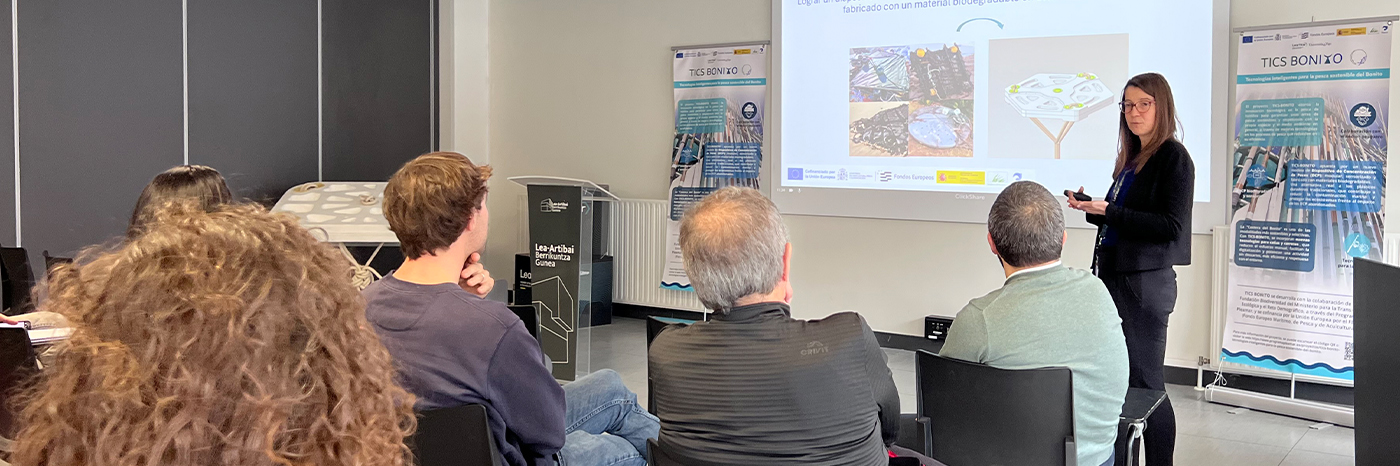
The Leartiker team, led by researcher Blanca Lekube, has focused on developing Fish Aggregating Devices (FADs) for deep-sea fishing, designed to be manufactured from non-entangling materials that are biodegradable in marine environments. Replacing the conventional plastic materials traditionally used in FADs has been a challenge, as has ensuring the functionality of the demonstrators across different oceans. To this end, Leartiker has developed a design using polymers that are biodegradable in marine environments, capable of delivering the necessary performance in the open ocean. Furthermore, a study of the biodegradation of the materials under different marine conditions has been conducted to validate the reduction in their environmental impact once their useful life has ended.
The innovative prototypes that have been developed are currently being tested at the Mutriku fish farm, and thanks to collaboration with tuna fishing companies, they will soon be able to be tested under real-world conditions.
New rod support systems
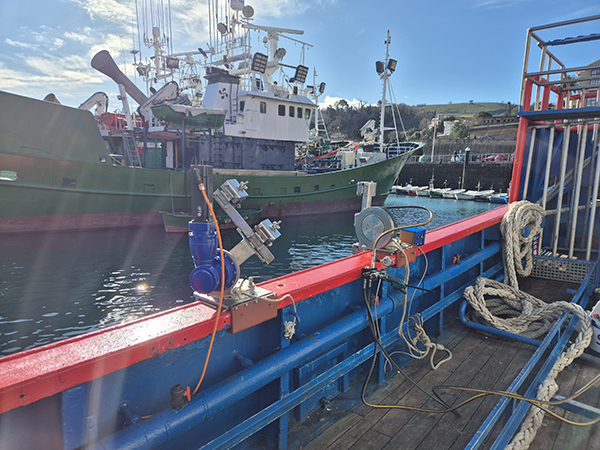
Meanwhile, the EN.EDI group at the University of Vigo, led by Julio Garrido, has focused on improving coastal bonito fishing processes, a highly selective method that is respectful of the marine ecosystem. Their contribution has resulted in the development of new rod support systems that integrate varying levels of automation and ergonomic improvements to reduce the physical strain on crew members, increase safety during operations, and improve the efficiency of the catch process. Given that this fishing method is based on practices deeply rooted among Cantabrian fishermen, the team has worked in close collaboration with the Getaria Fishermen’s Guild to ensure that every technological advancement is compatible with decades of accumulated experience and the actual operations of the vessels. In early February, the first evaluations were conducted on local vessels, validating the prototypes’ performance in port. The next step will be to test them under real-world conditions during the June fishing season.
Transfer of Results
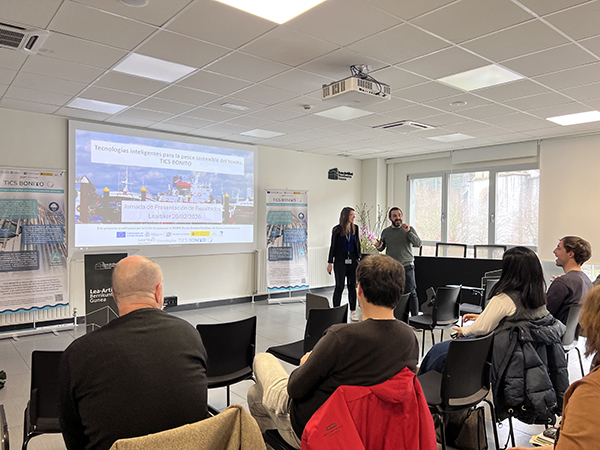
The transfer workshops held in Markina-Xemein and Vigo provided an opportunity to present the project’s progress directly to the fishing industry. At the Leartiker headquarters (Markina-Xemein), representatives from fishing associations, tuna fishing vessels, and the Basque Government participated; they examined in situ the developed FAD prototype and engaged in particularly fruitful discussions regarding the results obtained.
At the University of Vigo, attendees were able to observe the operation of the rod support prototypes in person, supplemented by audiovisual material available on the EN.EDI group’s website: https://en.edi.webs.uvigo.es/tics-bonito/
About Leartiker and the University of Vigo
The collaboration between Leartiker and the University of Vigo has been essential to the development of the innovative technologies that form the basis of this initiative. This is a long-standing collaboration, as the two institutions started working together in 2015, leading to the Circular Seas European project (2019-2023).
Leartiker is a specialised centre for the generation and transfer of scientific and technological knowledge. It is a member of the Mondragon Group and the Basque Research Technology Alliance - BRTA. The University of Vigo's EN.EDI research group provides its expertise in automation engineering, digitalisation and robotics. Together, these partners are committed to delivering innovation and sustainability in the fishing industry.
The technology centre, which is based in Markina-Xemein (Biscay), led the project and was responsible for developing biodegradable materials, designing the FAD and coordinating the project. Meanwhile, the University of Vigo's EN.EDI group was responsible for automation and digitalisation aspects.
This project is being carried out with the support of the Ministry for the Ecological Transition and Demographic Challenge's Biodiversity Foundation, through the Pleamar Programme, and it is jointly funded by the European Union through the EMFAF (European Maritime, Fisheries and Aquaculture Fund).






 info@leartiker.com