Tissue engineering takes centre stage at the 14th edition of Polymers and Medical Applications at Leartiker
On 12 June, Leartiker hosted the 14th edition of the Polymers and Medical Applications conference, an event that once again brought together the healthcare R&D&I ecosystem to share knowledge, forge connections and explore the challenges that will shape the sector’s future.
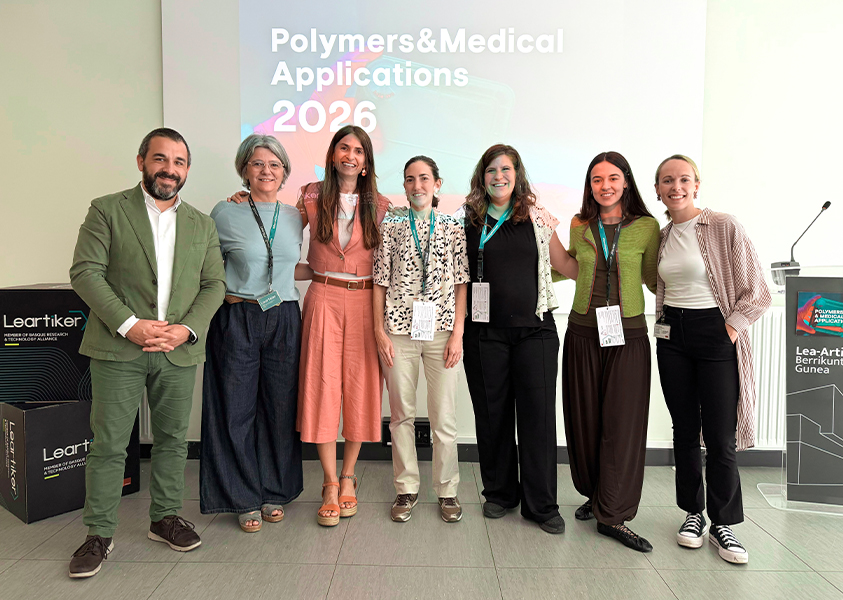
This year’s event focused on advances in tissue engineering, examined from various perspectives ranging from in vitro 3D models to biomaterials, bioprinting and advanced therapies and their transition to clinical practice. This diverse yet complementary approach provided a rich and practical overview of the current state of research.
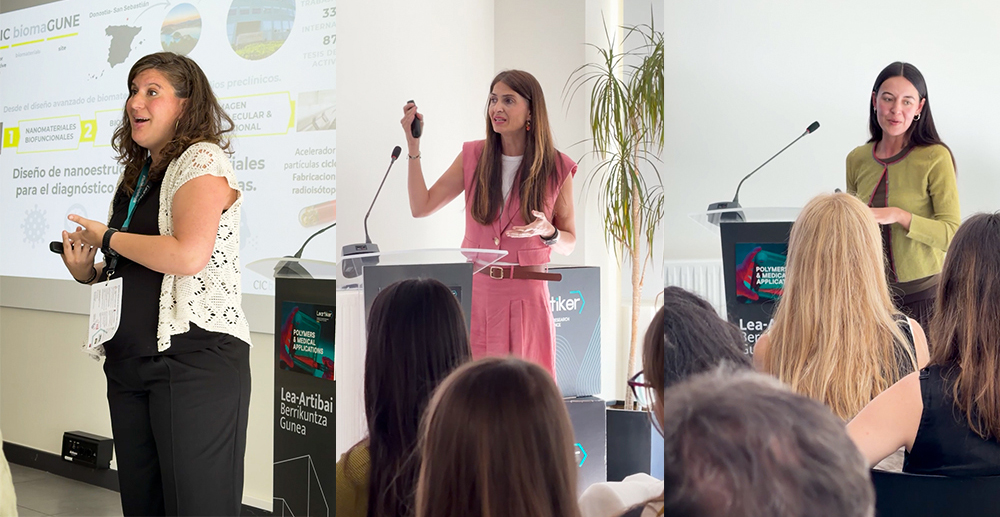
The event began with a welcome address by Jon Anakabe, General Director of Leartiker, followed by a speech by Ms. Maialen Agirre, Director of Innovation for the Basque Government, who emphasised the importance of bringing together scientific, business and industrial expertise to address the country’s major health challenges. Throughout the morning, a series of presentations focused on key aspects such as the development and characterisation of hydrogels to mimic the tumour microenvironment (CCA-on-a-chip), presented by Izar Gorroñogoitia (Leartiker); hybrid materials for 4D bioprinting and their application in the design of in vitro models, presented by Dorleta Jiménez de Aberasturi (CIC biomaGUNE); and the viscoelastic and degradation properties of hyaluronic acid hydrogels for dermal applications, discussed by Virginia Sáez (I+Med).
From research to market: the role of the Innteract Project at the conference
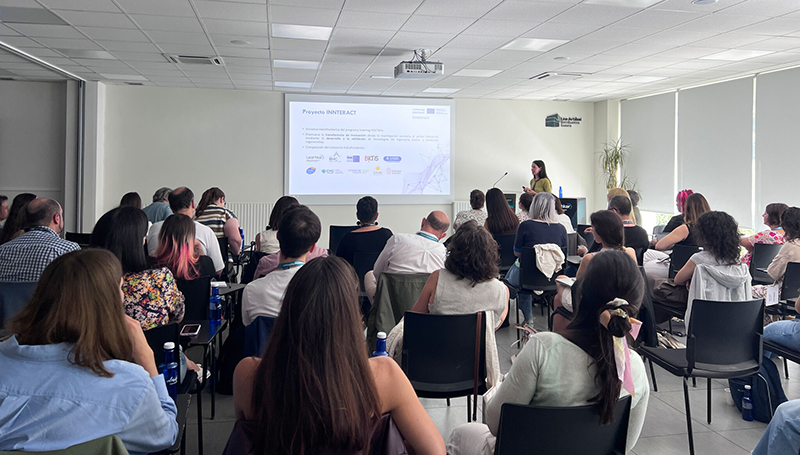
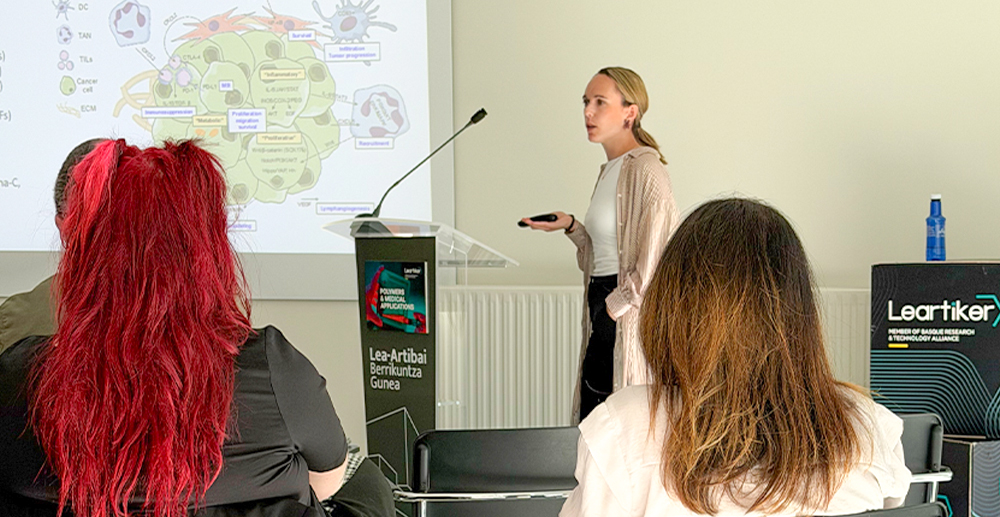
The final presentation, given by Ainhoa Irastorza (Biogipuzkoa), addressed the challenges facing the clinical implementation of advanced therapies. The presentation also served to introduce the European Innteract Project, led by Leartiker and in which Biogipuzkoa is also participating. During her talk, Irastorza outlined this initiative, aimed at promoting the transfer of innovation from healthcare research to the industrial sector. She also presented the medical devices being developed within the project, currently undergoing usability studies and preclinical trials. The ultimate goal is to facilitate their market launch with full guarantees of safety and efficacy. She also introduced TissueNet, a future cross-border network in tissue engineering and regenerative medicine within the POCTEFA framework, aimed at fostering collaboration, knowledge exchange and the competitiveness of the ecosystem.
An environment that brings together talent, ideas and collaboration
Beyond the technical content, the event once again stood out for the welcoming and collaborative atmosphere that characterises it. The networking breaks and informal spaces facilitated the exchange of ideas and the creation of new opportunities for collaboration. As some of the participants pointed out, this type of event not only allows for the sharing of knowledge, but also strengthens trust between organisations and opens the door to future joint projects. The complementarity between the different areas of work was, in fact, one of the most highly valued aspects.
At an institutional level, the importance of these initiatives as spaces that connect knowledge, industry and social needs was also emphasised. This is particularly relevant in a sector which, as noted during the event, faces significant challenges, such as the high cost of research and the regulatory requirements associated with complex and emerging technologies.
The day concluded with a visit to Leartiker’s facilities, a tour that allowed participants to continue exchanging views in a more informal setting and to see first-hand the work being carried out at the centre.
All in all, this latest edition of Polymers and Medical Applications has reaffirmed its role as an essential meeting point for the bio-health ecosystem, where science, innovation and collaboration come together to drive the sector’s future.





 info@leartiker.com